May 4, 2026
What a correctly fitting bra actually feels like
Tactile cues for a correct bra fit: no digging underwire, no riding band, no gaping cup — described calmly and clearly.
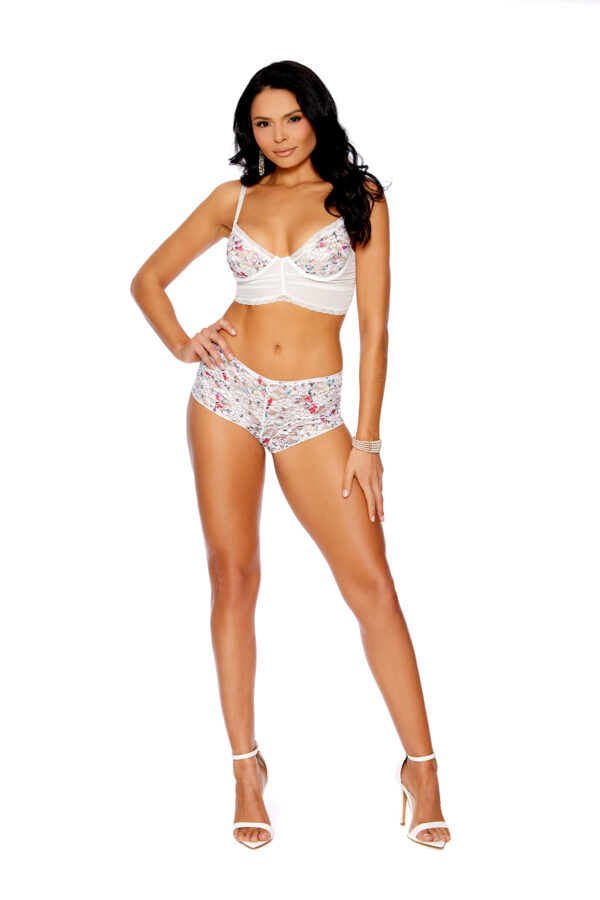
Fit descriptions in lingerie retail tend toward the visual — what it looks like in a photograph. But lingerie is worn, not displayed, and the experience of wearing it is tactile before it is anything else. A correctly fitting bra is something you feel before you see it: a band that sits still, cups that contain without pressing, straps that contribute without digging.
These are not abstract qualities. Each has a specific, identifiable character. This guide describes them.
What the band should feel like
The band is the structural foundation of the bra. When it is the right size, you should be aware of it as a physical presence — snug, level — without it being the thing you are most aware of during the day.
Specifically: the band should stay in place when you move. Raise both arms above your head; the band should not ride up. Lean forward; the band should not slide. Reach behind your back; the band should not migrate upward at the front.
You should be able to slide two fingers beneath the band but should not be able to pull it more than an inch away from the body. If you can pull it three or four inches away, the band is too loose and is doing insufficient work. If you cannot get two fingers under it at all, it may be too tight — though tightness that eases over the course of the day is often the band settling against the body rather than being genuinely constricting.
The back of the band should sit at the same horizontal level as the front. A band that rides up at the back is too loose.
What the cups should feel like
The cups should feel like they contain all breast tissue fully, without pressing on it and without leaving space that is filled with fabric rather than breast.
Specifically: the upper edge of the cup should sit against the skin, not away from it. If you can push fabric inward at the top of the cup, the cup has excess volume and the cup is probably too large. If breast tissue overflows above or at the sides of the cup, the cup is too small.
The underwire, if present, should not be felt directly during regular wear. You should be aware of its structural support, but not aware of the wire itself pressing on tissue. If the wire digs at the centre front, into the side breast tissue, or into the underarm, it is either incorrectly placed or the size is wrong.
What the straps should feel like
The straps should feel like they are contributing to support — taking a share of the load from the cups — without being the primary mechanism. If your straps are the thing you are most aware of, they are doing too much work, which usually means the band is doing too little.
Straps should not dig into the shoulder. If you have shoulder indentations after wearing, shorten the band if it is loose, or consider wider straps if the band is already correctly fitted.
Straps should not fall off the shoulder. If they slide, the strap position may be set too wide for your shoulder slope. Convertible styles with a centre-back attachment are useful for this.
A day's wear test
The most reliable test of a correct fit is how the bra feels after eight hours of wear. A correctly fitting bra should require no readjustment during the day. If you are aware of it by mid-afternoon in a way you were not at 9am, something in the fit is not quite right — and the problem has usually been there from the start, just below the threshold of notice.
For the measurement method that gets you to the right starting size, see how to measure your bra band size at home. For checking your fit without a professional, see how to check your bra size without a fitter.
The full bra fit guide covers every component in detail.