May 4, 2026
How to measure your bra band size at home
Step-by-step guide to the two-measurement method for accurate bra band sizing, with clear guidance and no fuss.
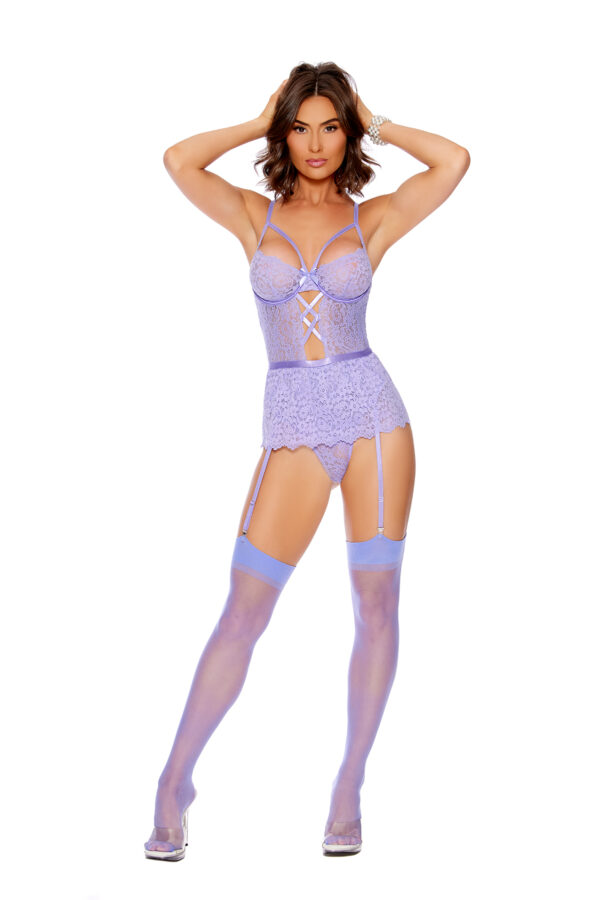
Measuring your bra band size at home takes fewer than five minutes and requires only a soft tape measure. The result is a number that tells you where to start when ordering, and a reference point for checking whether a bra you already own is fitted correctly.
This is the method used by professional fitters — not the older "add four inches" formula that overstates the band and produces a misfitting result.
What you need
A soft tape measure. A mirror is helpful but not essential. Stand up straight, or ask someone else to take the measurement for you.
The two measurements
First measurement — the band: wrap the tape measure around your ribcage, directly below the breast tissue, at the place where the bra band will sit. Hold the tape snugly — firm contact with the skin, but not compressed. Keep it parallel to the floor all the way around.
Read the number in inches. If it lands on an even number, that is your band size. If it lands on an odd number — say, 31 or 33 — round to the nearest even number. A 31-inch measurement gives a band size of 30 or 32; try 32 first, because rounding up is more common.
Second measurement — the bust: wrap the tape around the fullest part of the bust, keeping it level. This measurement should be taken over a well-fitting, unpadded bra if you have one, or over a light top — not without any support, as the position of the tissue affects the reading.
Read the number in inches.
Converting to cup size
Subtract the band measurement from the bust measurement. The difference, in inches, maps to the cup letter:
- 1 inch: A cup
- 2 inches: B cup
- 3 inches: C cup
- 4 inches: D cup
- 5 inches: DD (or E in some UK sizing)
- 6 inches: E (or F in some UK sizing)
And so on, with each additional inch adding one cup size.
Why the "add four" method is wrong
The older method — measuring the ribcage and adding four to five inches to arrive at a band size — was developed in an era when elastic construction was less reliable and bras needed a looser band to function. Modern bras use elasticised bands designed to fit at the actual ribcage measurement. Adding four inches produces a band that is two sizes too large and compensates by requiring a smaller cup letter, which undersizes the cup volume.
The result: a band that rides up, straps that dig in because they are compensating for the loose band, and cups that overflow or gape. All of these fit problems resolve when the band is correctly sized.
Confirming the fit
Your measurements give you a starting point, not a final answer. Once you have a bra in hand, check:
- The band should sit level around the body, not higher at the back than the front.
- You should be able to fit two fingers beneath the band, but no more.
- The underwire, if present, should sit flat on the chest wall all the way around — not on breast tissue.
- The cups should contain all tissue without overflow or gaping.
If the fit is off, try the sister size — going up one band and down one cup, or down one band and up one cup — before deciding the size is wrong. For more on this, see sister sizing in bras, explained simply.
For the full four-point fit check, the bra fit guide is the complete reference.