May 4, 2026
Silk versus modal lingerie for everyday wear
Drape and care requirements against resilience and approachability — no clear winner, honest trade-offs, real guidance.
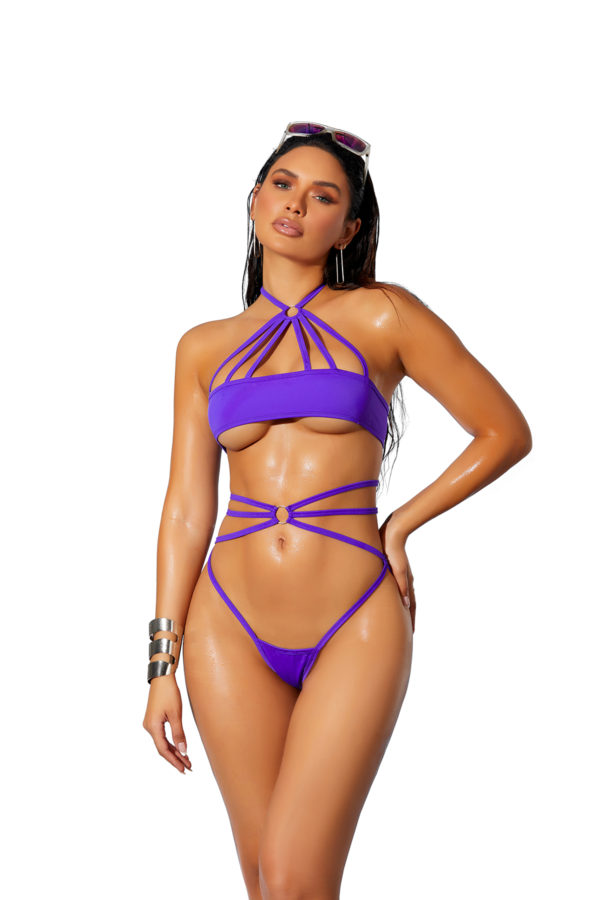
Silk and modal for everyday lingerie: this is a comparison where neither fabric wins clearly, because the right choice depends on what you are optimising for. Both are fine fabrics for daily wear; they trade off against each other in specific and predictable ways.
What silk brings to everyday wear
A silk camisole or slip worn daily delivers the fabric's best qualities at their most useful: cool against skin in all temperatures, highly moisture-wicking, and with a drape that feels distinctly different from any synthetic. The texture does not change with washing — if anything, a well-cared-for silk piece softens slightly after the first few washes as the fabric relaxes.
The trade-off: silk requires cool hand-washing and specific detergent. It is not a throw-in-the-machine fabric. For people who manage their laundry carefully and value the experience of wearing silk, this is a reasonable exchange. For people whose daily laundry is done in batches in the machine, silk as a daily-wear fabric creates friction in the care routine.
Silk also shows wear over time. Not quickly — a quality silk at 16+ momme will last years — but eventually the surface begins to change, the lustre softens, and the fabric shows its age in a way that modal does not.
What modal brings to everyday wear
Modal is designed precisely for the everyday wear case. Its filament is fine enough to feel soft and lightweight against skin. It is machine-washable at 30°C. It resists pilling. It recovers its shape after washing. It is more uniformly available at consistent quality than silk, because the production process is more controlled.
The trade-off: modal does not have the temperature-regulating properties of silk. In warm conditions, it is breathable but not as actively cooling. And the tactile experience — genuinely fine modal in a jersey construction — is not silk, and some people are aware of that difference and find it matters.
The practical comparison
Care: modal wins. Cool machine-wash versus cool hand-wash — the difference is significant for daily-wear practicality.
Feel against skin: close call, depends on the specific fabric and construction. Micro-modal jersey is competitive with lighter silk in softness. Standard modal versus 16-momme silk: the silk is usually softer and more distinctly pleasurable.
Temperature regulation: silk wins. Modal is good; silk is measurably better in active temperature management.
Durability: modal wins for wear-and-wash cycles. Silk is more vulnerable to physical damage and care errors.
Drape: silk wins for a fluid, body-following quality. Modal drapes well for a knit fabric but does not replicate the fluid quality of charmeuse or fine silk satin.
The mixed wardrobe
Most considered everyday lingerie wardrobes contain both: modal for the daily cycle pieces that go in the machine, silk for the occasional pieces — the slip that reads as a treat, the camisole worn for a particular occasion — where the quality of the experience justifies the additional care.
The materials guide covers both fabrics in full context.