May 4, 2026
The plunge bra: how it works and when to wear it
Wire placement, fabric bridge, and compatible necklines — including a note on cup security for fuller busts.
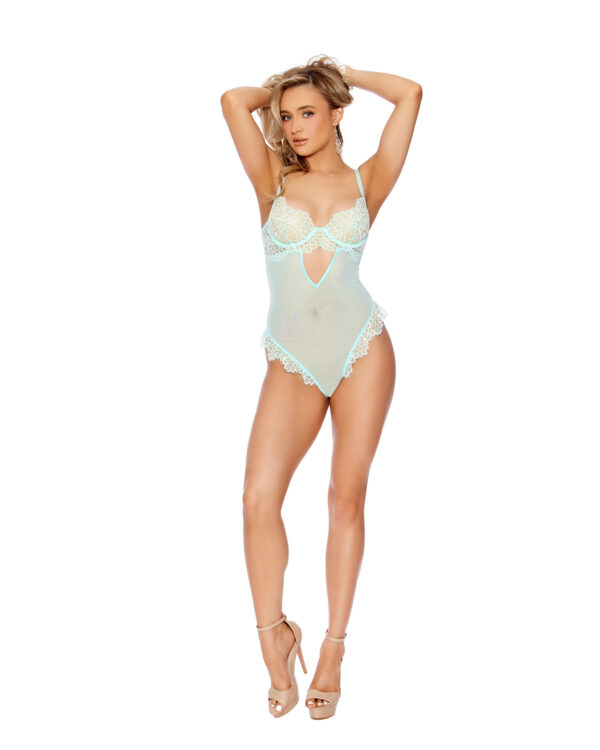
A plunge bra is designed for one primary purpose: to work under a low-V neckline without the bra centre being visible. Every design decision in a plunge follows from this requirement — the very low centre-front gore, the inward-angled wires, the narrow fabric bridge.
What distinguishes a plunge from other underwire styles
The gore — the bridge of fabric at the centre front — is much lower in a plunge than in a full-cup or balconette bra. Where a standard bra might have a gore of 2–3 cm height, a plunge may have a gore of less than 1 cm, sometimes just a narrow strip of elastic or fabric. This allows the bra to sit below very deep V-necklines.
The wires angle inward more sharply than in other styles, directing the breast tissue forward and toward the centre. This creates the characteristic plunge cleavage and simultaneously means the wire sits closer to the sternum, which requires good gore tack for the bra to work correctly.
The cup fabric is often cut lower at the inside edge than a full-cup style, contributing to the low-centre visual while maintaining cup support at the outer breast.
Neckline compatibility
The plunge is specifically suited to low V-necklines, wrap-style tops and dresses, and any neckline that would expose the centre-front gore of a standard bra. It is the correct functional choice for these necklines — other styles will simply show.
For wide or square necklines, the balconette is typically the better match. For strapless or racer-back necklines, the strapless bra or a convertible style is appropriate.
Gore tack and fit
Because the gore is so low and narrow, the plunge depends absolutely on the gore sitting flat against the sternum. If the gore lifts even slightly, the inward-angled wires are no longer held in their correct position and the cups swing outward, losing the plunge geometry entirely.
The gore will lift if the cup is too small (insufficient cup depth pushes the gore away), if the breasts have close spacing that cannot accommodate the wire angle, or if the inward wire direction is poorly matched to the breast root position.
Before wearing a plunge bra, check the gore tack — press one finger gently to the centre front and confirm the bra rests flat. If it does not, either the size is wrong or the style is not suited to your anatomy, and a different cut will serve better.
Cup security for fuller busts
At D+ cup sizes, the plunge geometry creates a challenge: the inward-angled cups and lower cup height mean that fuller breast tissue can overflow the cup edge during movement, particularly at the top and the outer sides. Full-bust wearers who find plunge styles comfortable at rest often find them less secure under a blazer or in an active day.
If you wear a full bust and want a plunge style:
- Look for plunge styles with a slightly higher cup on the inner edge
- Ensure the cup projection is sufficient — a shallow plunge cup on a full bust will not contain the breast correctly
- Consider a plunge-balconette hybrid, which provides a lower centre-front than a standard balconette but more outer-cup security than a pure plunge
Browse the plunge bra edit on CougarMetropolis. The full-bust fitting tips guide and the bra fit guide cover the fit context in full.