May 4, 2026
What to look for when buying lingerie online
Size charts, fabric descriptions, returns policy, and editorial versus brand-shot images — what to read before you order.
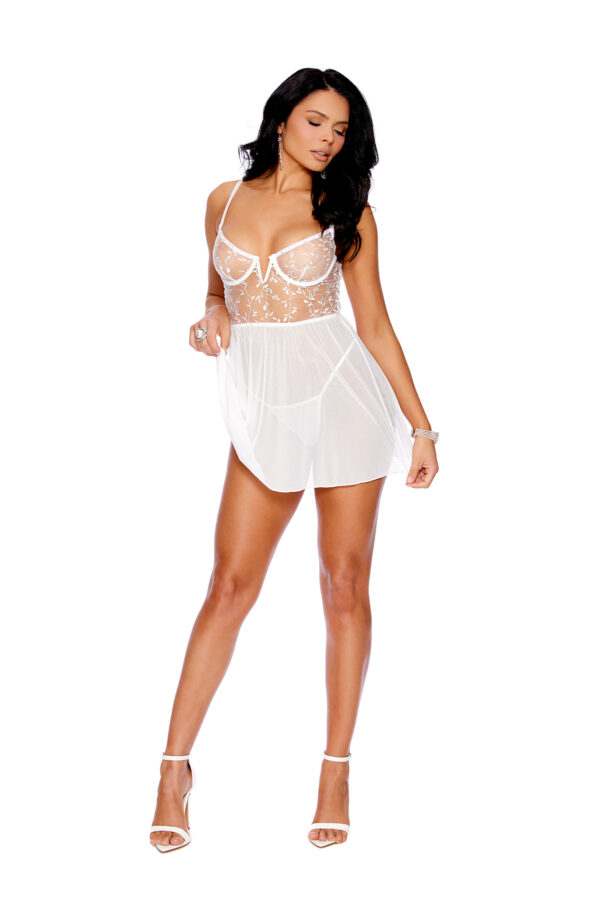
Buying lingerie online without trying it on first requires reading product pages with more precision than buying clothing in most other categories, because the tolerance for error is lower and the variables that affect fit and feel are harder to communicate visually. A few specific things on a product page reliably indicate whether a piece will work; a few others reliably indicate risk.
The size chart: the most important document
Before anything else, locate and read the size chart for the specific garment you are considering. Not the general sizing guidance for the brand — the measurements for this product.
What to look for:
- Bust, waist, and hip measurements (in cm or inches) for each size
- For bras: band and cup measurements
- For bodysuits: torso length
- For pyjamas and nightgowns: inseam length and body length
- Ease description: "slim fit" or "generous fit" tells you whether to size true to measurement or adjust
If the size chart lists only the size label (S, M, L, or 8, 10, 12) without measurements, contact the vendor before ordering. A size label without measurements is not a usable specification.
The fabric specification: more than fibre composition
A product description that says "silk" tells you the fibre. What you additionally want to know:
- Momme weight (for silk): indicates fabric weight, drape, and durability. 16mm+ for a substantive piece; under 12mm is likely to be sheerer and more fragile than a product photograph suggests.
- Weave type: charmeuse, satin, crepe, voile — each has a significantly different drape profile.
- Lace specification: is it described as woven/Leavers/Calais, or simply as "lace trim"? The former indicates quality; the latter is unverified.
- Stretch: for jersey or stretch-lace pieces, the percentage of elastane in the composition indicates how much the fabric will stretch and whether it recovers its shape under use.
Photography: editorial versus brand-shot
Editorial photography — shot on a model in natural or editorial lighting, often with movement or expression — tells you more about how the garment drapes and moves than flat or studio photography. If the vendor uses editorial photography, the images are generally more reliable for assessing drape and silhouette.
Brand-shot photography — the standard e-commerce style, shot on a model against a white background in a controlled studio — is useful for colour accuracy and construction detail, but may not accurately convey how the garment moves or how it drapes on a different body type from the model.
Look for multiple images, ideally from different angles and in both worn and flat views. A flat product shot shows the construction; a worn shot shows the silhouette.
Returns policy: the risk management tool
A clear, straightforward returns or exchange policy changes the risk calculation on an uncertain order. A vendor who offers free exchanges within 14–30 days makes ordering between sizes, or ordering a new style from a new brand, a relatively low-risk decision. A vendor with a strict final-sale policy or a complex returns process makes the same order significantly higher-risk.
Read the returns policy before ordering from a new vendor, not after. On CougarMetropolis, vendor returns policies are stated on the vendor storefront page.
Reviewing vendor context
An order from a CougarMetropolis vendor has the additional context of the vendor's curated presentation, their care information, and the CougarMetropolis editorial assessment of their range. This context is not available when ordering directly from individual boutique websites where the presentation varies widely.
For sizing methodology specific to garment types, the lingerie sizing guide is the full reference.