May 4, 2026
What a balconette bra is and who it suits
Cut geometry, neckline compatibility, and the body proportions a balconette flatters — a clear informational guide.
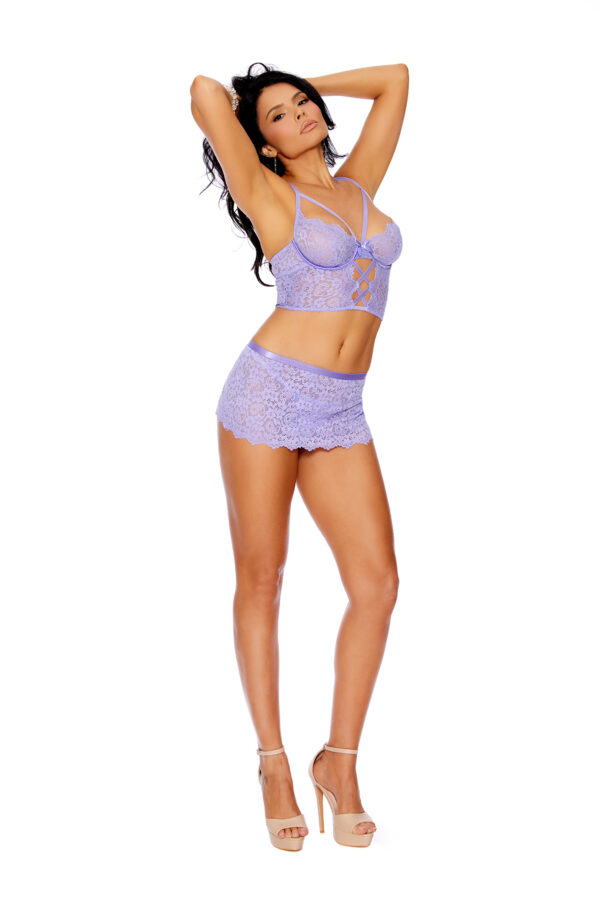
A balconette bra — sometimes called a balcony bra — is defined by its cut: the cups are wide, low at the centre, and angled so the straps attach at the outer edge of the cup rather than the top. The result is a bra that sits lower across the bust than a full-cup or demi-cup bra and creates a characteristic wide, horizontal neckline across the chest.
This geometry has specific consequences for who it works well for, what necklines it pairs with, and how it fits.
The cut geometry
The balconette cup starts at the natural base of the breast, rises to a cup edge that crosses the breast at roughly mid-height, and terminates in a strap that attaches at the outer upper corner. This sets the breast in a shelf-like position — supported from below and framed at the sides, with the upper breast largely exposed.
The wire in a balconette runs similarly wide, sitting at the outer breast root rather than curving inward as it would in a plunge or push-up style. This makes the balconette particularly suited to women with wider breast spacing and a wide rib cage, because the wire geometry matches the anatomy rather than fighting it.
Neckline compatibility
The wide, horizontal upper edge of a balconette makes it visible under wide, square, and off-shoulder necklines where other bra styles would show a cup or strap. This is partly the purpose of the style — it was designed for the kind of wide décolletage necklines common in 1950s and 1960s fashion and has remained associated with that neckline family.
For V-necks, the low centre-front of the balconette means the gore sits much lower than in a full-cup bra, making the balconette less visible under moderate V-necks than those styles. For very deep V-necks, a plunge bra is more appropriate.
Who the balconette suits
The balconette lifts the breast by supporting it from below and framing it at the sides, which creates a rounded, full silhouette across the upper chest. This works particularly well for:
- Wider breast spacing, where the wide-set wire sits correctly on the chest wall
- Full busts at D+ cup where the shelf effect is visually pronounced and the wide-set wire provides correct anatomical support
- Wider frames generally, where the wide strap attachment prevents the straps from sitting too close together
The balconette is less suited to:
- Very close breast spacing, where the wide gore may create pressure at the centre
- Very small busts, where the shelf effect has less material to work with and the visual result is less pronounced
Sizing notes
Balconette cups tend to be lower in cup height than full-cup styles, which means that for full busts the cup may not provide full coverage at the top. If overflow at the upper cup is a concern, either size up one cup or look for a "full balconette" style with a slightly higher cup.
Browse the balconette bra edit on CougarMetropolis with the specific style filter. For the fit context, the bra fit guide and the full-bust fitting tips are the relevant references.